
Tikim at Tahi: An Anti-perfection, Anti-algorithm Resistance
Choosing the slow, handmade, imperfect, incomplete, inconvenient and inefficient in a culture of speeding up, digitizing, standardizing, streamlining and optimizing everything

To choose the slow, the handmade, the imperfect, the “incomplete”, the “inconvenient”, the “inefficient” — in a dominant human culture oriented towards productivity and profit, towards speeding up, digitizing, standardizing, streamlining and optimizing everything — is an act of resistance.
These are the choices we made in our recent potluck of food and creativity brought together by @hapagugnayan @goodfoodcommunity and @hiwagahands at @goodfoodsundays last July 19, 2026.
We’ve been conditioned to “perform” at our best — to create Instagram-worthy dishes or art — without seeing what doesn’t go into a curated feed, the mess. Here, maybe we weren’t fully satisfied with how our dish tasted the first time, or how it looked, but we offered it humbly to others. We’ve had stitches we wanted to undo, and magazine cutouts that flew away or got glued to the “wrong” spot, but finished or unfinished, we shared what we made. Some things we could still undo, but some things we had to make do with, improvise, and let go to the art of play.
From our individual experiences, I relate it to the social conditioning with a capitalist and colonial definition of “progress” and “development” that we’ve forgotten what it was like to be in right relationship with time, with our creativity, with our food, with ourselves and with each other.
Yes, we want efficiency and a certain set of standards when it comes to government services. We want clear strategies and processes in our healthcare system and public health. We want well-planned, well-engineered and completed public transportation projects. We want to digitize historical records and provide digital ways for students to learn.
But right now, project strategies and process “efficiencies” prioritize profit while social safety nets lag behind. We’re conditioned to think of expressways1 and economic zones2 as solutions to unemployment or poverty, but whose interests do they really serve? We’ve directed our creative energies to those places so much that we’ve forgotten how to imagine another, more inherently human way of being.
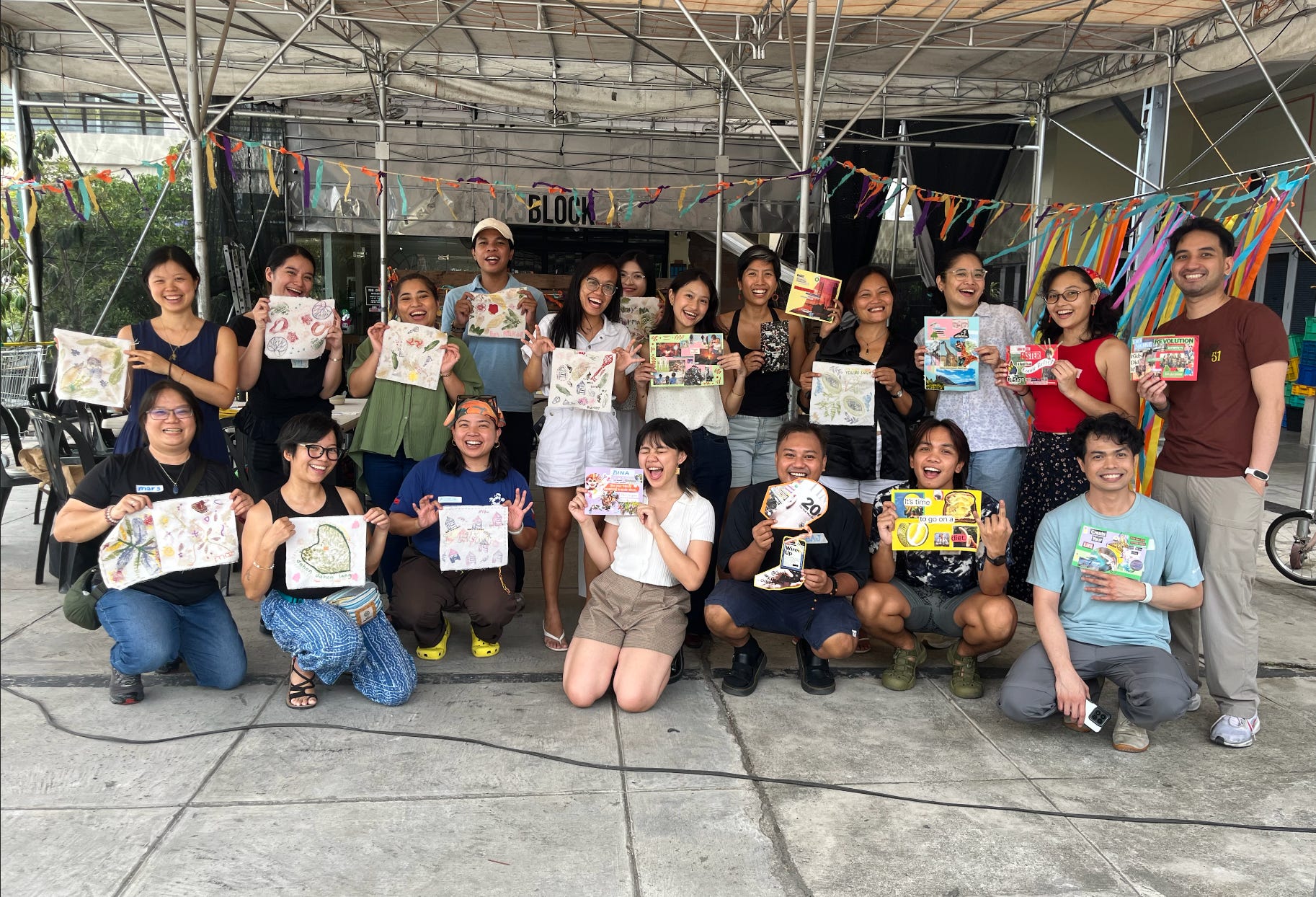
This gathering — the conversation and connections we’ve made before it, and the conversations and connections we hope they continue to usher — reminds me of our power to resist the dominant narratives shaped by an elite few for profit or personal gain, and to rewrite the narratives anew with collective care and flourishing for all in mind.
The work continues, and we’ll be launching a 5-week anti-perfection, anti-algorithm writing circle this August (August 29, September 5 and 19 for live sessions) + our next in-person gathering on September 27 — both as continuing efforts to be in solidarity with farmers through the work of Good Food Community.
We look forward to sharing the space with you very soon! Abangan!
Tagahain sa Hapag Ugnayan,
Jen Horn | Pagbubuo
The whole SALEX issue has us thinking of what the true costs of a build-build-build (and for cars, not people) mindset has on communities and the environment. See this Sunstar article: “Mass cutting of decades-old trees in Manila sparks public outcry,” and it’s just interesting to note how differently phrased these other headlines from Inquirer and Manila Bulletin are. Makes me wonder what message the latter two were trying to convey with what they chose to highlight in their headlines, and what perspectives are missing in their stories.
If you aren’t yet caught up with what Pax Silica is about, you can read more about it on Rappler to learn more about what its goals are and what concerns it raises, and also about whose interests it really serves.